
He-Man in 1983: Why 65 Episodes Made Eternia a Daily Habit
On September 5, 2026, He-Man’s familiar US premiere date turns 43. The sword and transformation deserve their place in the memory bank, but another kind of power helped the series endure: a package of 65 episodes designed to bring Eternia back every weekday.
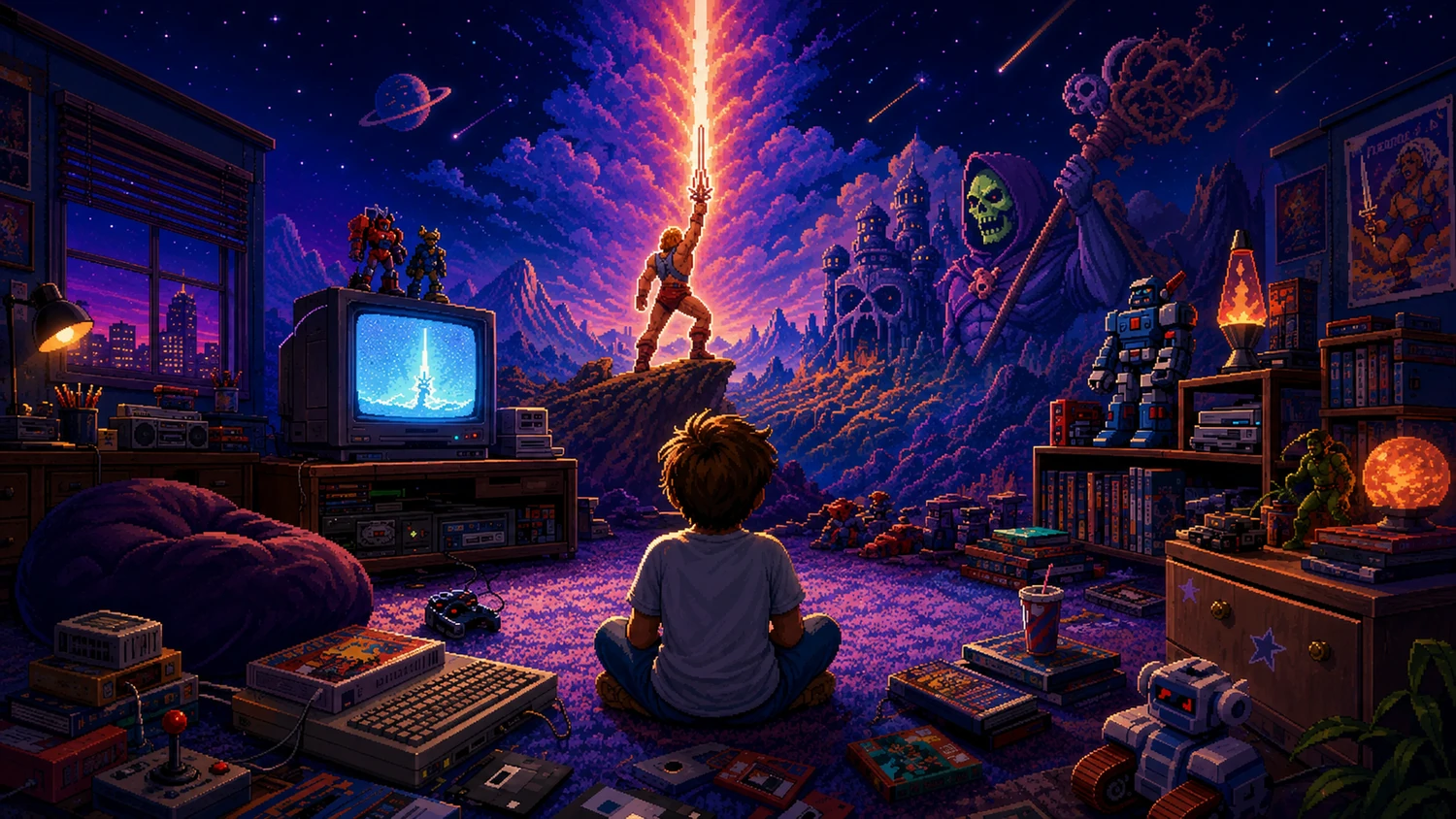
Think of the scene around the screen: a schoolbag dropped beside the sofa, a figure waiting on the carpet, a television already warming up. That is an imagined scene, but it suggests a useful question. How does a character become part of ordinary life rather than an occasional visitor? For Filmation’s He-Man and the Masters of the Universe, the answer includes the way the programme was sold, scheduled and repeated.
NerdSpot’s earlier guide to He-Man’s first broadcast introduces the characters and memorable episodes. This anniversary asks a different question: what did the daily format make possible?
September 5 marks a US launch, not everyone’s first episode
The Nerd Calendar records the anniversary on September 5. The epguides episode guide lists September 5, 1983, for “Diamond Ray of Disappearance” and identifies the original US outlet as syndication. It was a Monday.
Keep the geographical boundary attached to that date. It does not establish when a German, French or Spanish-speaking viewer first met the series, nor does it prove that every local station ran the same episode at the same hour. A shared anniversary is a useful reference point; personal television memories follow local schedules.
That also helps explain the tempting “Saturday morning cartoon” label. It describes an entire remembered world of children’s animation, but it can blur the particular business that brought He-Man to US screens. The daily slot is the revealing part of this story.
The unusually practical magic of 65
In his memoir, Creating the Filmation Generation, page 198, producer Lou Scheimer explains that 65 episodes supported Monday-to-Friday broadcasts and four runs per year. Stations acquired the series through barter: advertising time was divided between the station and the programme’s commercial partners.
The arithmetic is simple: 65 episodes ÷ 5 weekdays = 13 weeks. Four cycles fill 52 weeks in an idealised schedule. That is a scheduling model, not a claim that holidays, pre-emptions or local decisions never interrupted it.
For a station, such a package answers a recurring question: what goes into this slot tomorrow? For a viewer, it creates a different expectation: this world will be here again. Those are two sides of the same arrangement. The dependable supply that makes a programme convenient to broadcast also gives its audience repeated opportunities to become familiar with it.
First-run syndication means new episodes are offered to individual stations rather than arriving solely through a national network’s common schedule. It therefore separates access to a series from a single nationwide appointment. Local scheduling flexibility and a consistent supply of adventures can coexist.
A toy tie-in with room for storytellers
The commercial starting point should remain visible. Masters of the Universe was a toy property. Yet that does not describe every decision inside the programme. In a 2006 interview with Animation World Network, Scheimer recalled securing creative control and Westinghouse financing. He also saw the production volume as a way to keep artists working throughout the year.
That combination makes the series more interesting than either a purely cynical sales pitch or a completely independent artistic project. Different participants could want different things from the same episode. A toy company could value recognition, a station reliable programming and a writer a story worth telling.
From the audience’s side, the distinction is practical. A figure can supply an appearance and a pose. A story supplies reasons to act, relationships to negotiate and situations to imagine. The programme’s dramatic work begins where the object alone stops explaining itself. Commercial purpose does not automatically erase that work; it makes examining it worthwhile.
Repetition can become an invitation
Here is the editorial reading this anniversary proposes: a repeatable hero ritual is especially well suited to television that returns often. The familiar transformation offers an immediate point of orientation. Before the particular adventure has explained its problem, the viewer knows that ordinary identity and extraordinary responsibility belong to the same person.
Read as a piece of storytelling, that structure has useful consequences. The audience can anticipate a moment without knowing the entire plot. Familiarity offers a place to enter; a new predicament gives the visit a purpose. Repetition and variation are doing different jobs.
The same structure is easy to carry into play. A cardboard sword needs no production budget. A child can reproduce a gesture, invent a danger and move straight into a new adventure. This is an interpretation of the format’s appeal, not evidence that every child watched or played in the same way. It helps explain what the television image makes available for an audience to use.
Strength becomes interesting when it needs judgement
In SYFY WIRE’s oral history, creative consultant Michael Halperin describes wanting a hero who used his wits and resorted to strength only when necessary. That first-person account gives us a useful lens for revisiting the spectacle.
If power alone settled every problem, a very strong hero would leave little room for a story. Questions of judgement reopen that space: what needs protecting, when is force appropriate, and what responsibility follows the ability to act? A spectacular image can introduce those questions without answering them automatically.
On a rewatch, separate the pleasure of the transformation from the solution to the episode. Notice where recognising a problem, trusting someone or choosing restraint does work that a raised sword cannot. The exercise does not require pretending every script is equally subtle. It simply gives attention somewhere more productive to go than counting muscles.
The power of returning tomorrow
He-Man’s 43rd television anniversary is therefore also an anniversary of a format. The documented 65-episode package explains the weekday rhythm. The larger suggestion is ours: that rhythm gave a fantasy world repeated chances to become familiar, memorable and usable beyond the screen.
The sword is the image that survives. The timetable helps explain how often we saw it. Between those two sits the real subject of this anniversary: a television adventure that could finish for the day while the adventure on the carpet was only beginning.