
Steve Wozniak at 76: The Engineer Who Made Computers Personal
Steve Wozniak turns 76. Discover how the Apple I and Apple II used elegant engineering to make personal computers approachable, expandable and fun.
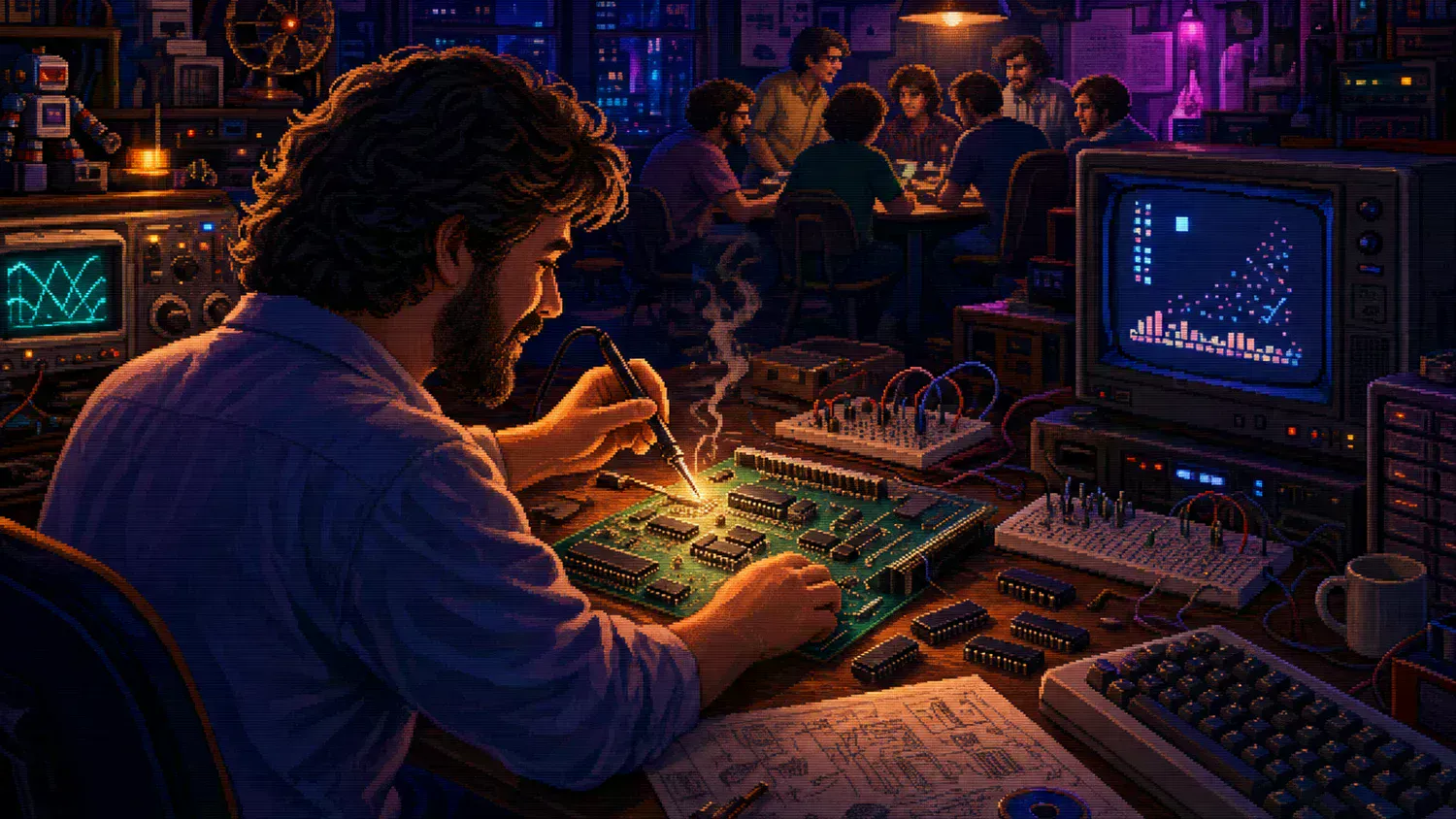
Before a personal computer could become a product category, it had to feel personal to an engineer at a workbench. Steve Wozniak turns 76 on August 11, 2026. His most lasting achievement is not merely that he co-founded Apple. It is that he designed machines which translated intimidating electronics into something a curious person could connect to a screen, explore and eventually make their own.
That distinction matters. The Apple I and Apple II did not appear in a world already waiting for a polished home computer. They emerged from hobbyist meetings, hand-built boards and a culture in which computing still looked like institutional equipment or a box of parts. Wozniak’s gift was to see how much experience could be created with disciplined, economical engineering.
A birthday for the builder behind the board
Stephen Gary Wozniak was born on August 11, 1950, in San Jose, California. Electronics fascinated him early, and by the 1970s he was designing calculators at Hewlett-Packard. His official biography describes a career shaped by engineering, teaching and philanthropy, but the origin story remains wonderfully direct: Woz wanted a computer he could use himself.
The Computer History Museum records that he presented the Apple I at the Homebrew Computer Club in 1976. The machine was aimed at hobbyists, yet an order for 50 assembled boards from a local computer store revealed something larger. A project created for the joy of building had found an audience.
The Apple I made the computer approachable
The Apple I was still far from a complete appliance. Its owner supplied essentials such as a keyboard, display, case and power supply. Even so, the board crossed an important line. It could connect to a television and accept input from a keyboard instead of requiring the switches and lights associated with many early hobby computers.
That changed the conversation. A computer was no longer only a machine to admire from the outside or operate through specialist rituals. It could become an interactive object on a desk. You typed. The machine answered. The distance between idea and result became dramatically shorter.
Wozniak did not accomplish that by throwing unlimited hardware at the problem. His work became famous for elegant circuit design: understanding the whole system deeply enough to remove unnecessary complexity. In modern software language, he optimized the stack before “the stack” became a standard way to describe it.
The Apple II turned a brilliant board into a personal world
Introduced in 1977, the Apple II pushed the idea much further. According to the Computer History Museum, it arrived as a self-contained machine with electronics, keyboard and power supply in one case, BASIC available in permanent memory and a television serving as the display. It also offered color graphics—an immediately visible invitation to games, experimentation and creative software.
Expansion slots gave the computer another kind of longevity. Owners and third-party developers could extend what it did instead of accepting a sealed definition of the product. The later floppy drive and software such as VisiCalc helped turn the Apple II from an enthusiast’s dream into a machine for homes, schools and businesses.
This is where Wozniak’s legacy becomes larger than a single brand. The Apple II suggested that a personal computer could be understandable without being limited, friendly without becoming trivial and open to invention after it left the factory.
Why engineering elegance still matters
Modern computers hide almost all of their complexity. That is often useful, but it can also make technology feel magical in the least helpful sense: powerful, opaque and difficult to question. Wozniak’s early machines came from a different relationship with hardware. Their constraints were visible. The designer had to understand timing, memory, display logic and input closely enough to make every part earn its place.
The lesson is not that every modern device should expose a circuit board. It is that elegant engineering creates room for people. Fewer unnecessary layers can mean lower cost, easier explanation, more reliable behavior and a clearer path from curiosity to mastery.
That principle still applies to small computers, open hardware, game development, retrocomputing and software. The cleverest solution is not automatically the one with the most features. Sometimes it is the one a new person can understand, repair, extend or use to make the next surprising thing.
Woz after the startup mythology
Apple’s founding story is often compressed into a familiar contrast: Steve Jobs as the product visionary and Steve Wozniak as the technical genius. The shorthand is memorable, but it flattens the human story. Wozniak was not simply “the other Steve.” His delight in jokes, teaching and hands-on experimentation is part of why his engineering still resonates with makers.
He returned to the University of California, Berkeley, and completed his degree in electrical engineering and computer science in 1986. He has supported technology in schools and hands-on learning, and in 1985 he received the US National Medal of Technology with Jobs. The Computer History Museum named him a Fellow in 1998 for co-founding Apple and inventing the Apple I personal computer.
The best tribute is to build something understandable
On Steve Wozniak’s 76th birthday, the familiar icons are easy to celebrate: the Apple I board, the beige Apple II case, the glowing cursor on a television. The deeper legacy sits underneath them. A personal computer became personal because an engineer treated efficiency, play and accessibility as parts of the same design problem.
That is a useful birthday challenge for any nerd: take one project and make it clearer. Remove one needless layer. Explain one circuit, function or rule so another person can enter the story. Build something not merely impressive, but inviting. Woz’s earliest computers changed the world because they made people want to sit down, type and discover what happened next.
Sources and further reading: Steve Wozniak’s official biography, the Computer History Museum profile, the museum’s history of the Apple II, and the National Inventors Hall of Fame.