
Spider-Man’s First Appearance: The Date Even Marvel Can’t Agree On
Marvel’s own pages disagree on the exact date of Spider-Man’s 1962 debut. Explore the mystery and why Amazing Fantasy #15 still works.
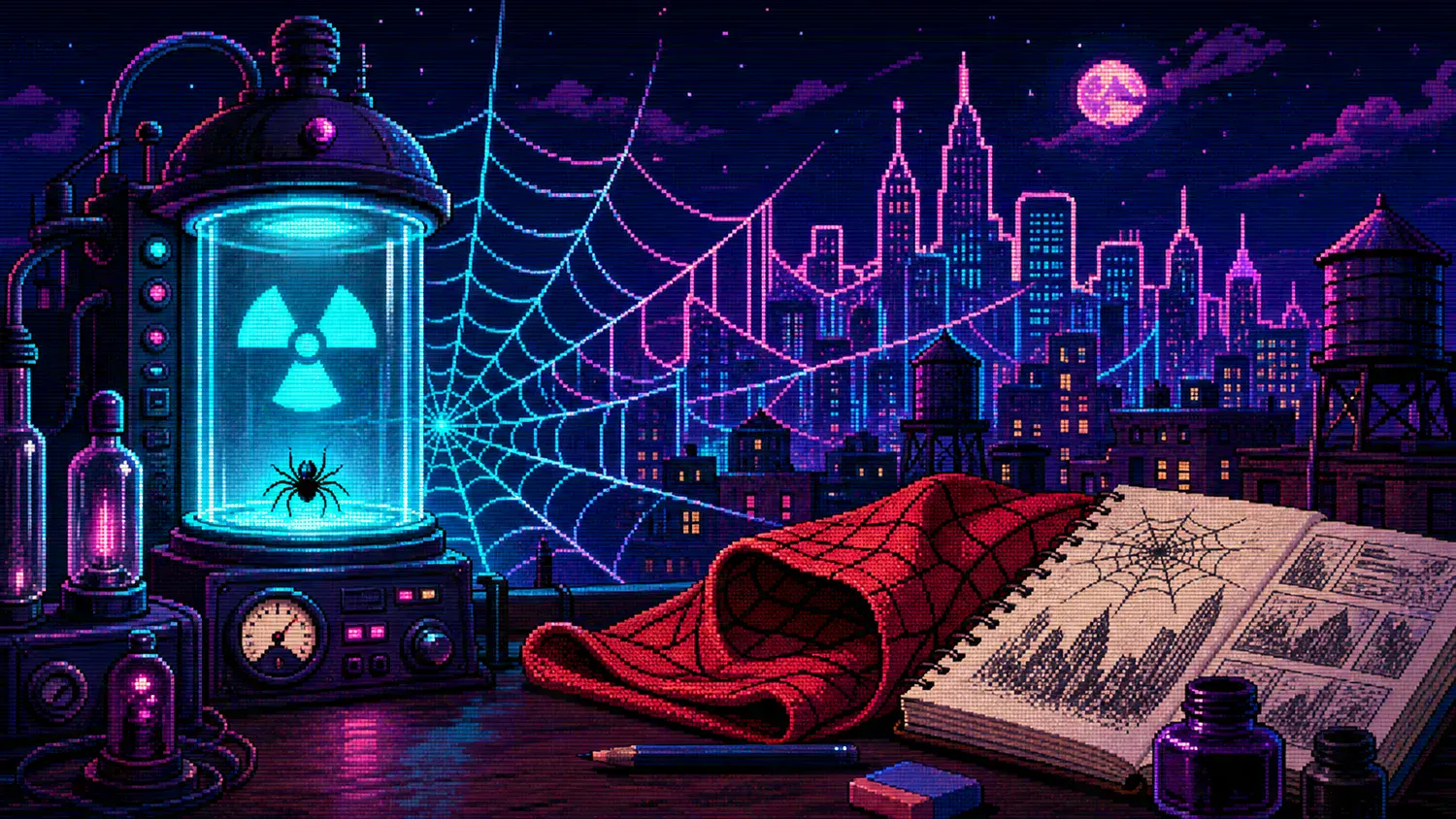
Spider-Man first appeared in Amazing Fantasy #15, written by Stan Lee and drawn by Steve Ditko, in August 1962. That much is solid comic-book history. The exact day is unexpectedly messier: Marvel’s issue catalog lists August 1, while another official Marvel feature lists August 10. For a character built around secret identities, even his publication date seems to have one.
So when did Spider-Man first appear?
The safest historical answer is August 1962. Marvel’s current issue page dates Amazing Fantasy #15 to August 1, 1962. Marvel’s retrospective “Schooling Spider-Man: The First Day” gives August 10, 1962. The Library of Congress, which preserves Steve Ditko’s original artwork for the issue, identifies the comic as an August 1962 publication without forcing the date into a single day.
NerdSpot marks August 10 in the Nerd Calendar because that date appears in Marvel’s own reading feature. But the disagreement is worth preserving rather than hiding. Comic release records from the period often mix cover dates, on-sale dates and later catalog data. The month is certain; the exact day depends on which official Marvel record you open.
Eleven pages built an entire superhero engine
The Spider-Man origin in Amazing Fantasy #15 takes only eleven pages. Within that compact space, Lee and Ditko introduce Peter Parker as an intelligent but isolated student, give him extraordinary abilities through an irradiated spider bite, let him chase fame, confront him with a preventable tragedy and leave him with a moral rule that can power decades of stories.
There is no lengthy cinematic runway. Peter tests his strength, defeats wrestler Crusher Hogan, creates a costume and mechanical web-shooters, becomes a television sensation and refuses to stop a fleeing burglar. When that same criminal later kills Uncle Ben, Peter understands the cost of looking out only for himself.
The famous responsibility lesson appears in the original issue as narration rather than a speech delivered by Uncle Ben. Later adaptations fused the idea more directly to Ben, but the 1962 story already makes the principle inseparable from Peter’s guilt and his future choices.
Peter Parker was a different kind of teenage hero
Teenagers in superhero comics were often sidekicks. Peter arrived as the main character. He was not introduced as a polished symbol or a billionaire with unlimited resources. He worried about social rejection, money and the people raising him. His intelligence was useful, but it did not protect him from arrogance or bad decisions.
That combination changed the fantasy. Readers were not merely invited to watch Spider-Man; they were asked to recognize Peter. Marvel’s own history describes the youthful protagonist as a revelation because young readers could see a high-school student navigating powers and an awkward social life on the same page.
The mask helped too. Spider-Man’s full-face design allowed almost anyone to imagine themselves beneath it, while Ditko’s body language kept the character expressive. He could look nervous, exhausted or triumphant without showing a face.
The web-shooters matter more than they seem
The radioactive bite gives Peter strength, agility and the ability to cling to walls. The web-shooters are his own invention. That distinction turns science from background decoration into part of his identity. Peter does not simply receive a complete superhero loadout; he engineers one.
It is a wonderfully nerdy detail. His most recognizable tool begins as a practical design problem solved by a student with limited resources. Every later version that revisits the web-shooters is returning to an essential piece of the original idea: Spider-Man succeeds through curiosity and invention as well as power.
Why Amazing Fantasy #15 still works
The debut survives because its central conflict is not really about the spider. It is about what a person does after discovering that their choices have consequences. Power makes Peter capable of acting, but responsibility gives that ability a direction.
Everything needed for the character is already present: the humor, the improvisation, the financial pressure, the guilt, the science and the stubborn impulse to keep helping even when doing so makes life harder. Later comics, films and games expand those elements, but they do not need to replace the original engine.
Marvel launched The Amazing Spider-Man as a solo series in 1963, only months after the debut. More than six decades later, creators are still remixing the same compact origin across comics, animation, cinema and games. The details change. The underlying question does not: if you could help and chose not to, what would that choice cost?
A legend with an appropriately tangled timestamp
Whether you mark August 1 or August 10, the meaningful anniversary is the same: in August 1962, an awkward science-minded student climbed onto the page and permanently changed superhero storytelling.
The date discrepancy does not weaken the history. It makes it more interesting — exactly the kind of tiny archival mystery NerdSpot exists to keep on the radar.
Sources and further reading: Marvel’s issue record for Amazing Fantasy #15, Marvel’s “Schooling Spider-Man” retrospective and the Library of Congress record for Steve Ditko’s original artwork.