
Why Guacamole Turns Brown—and What the Avocado Pit Really Does
September 16 is Guacamole Day. Before the next game-night bowl loses its green, there is a better question than which kitchen trick to trust: what, exactly, is that trick changing? The avocado pit offers a surprisingly useful lesson in experimental thinking.
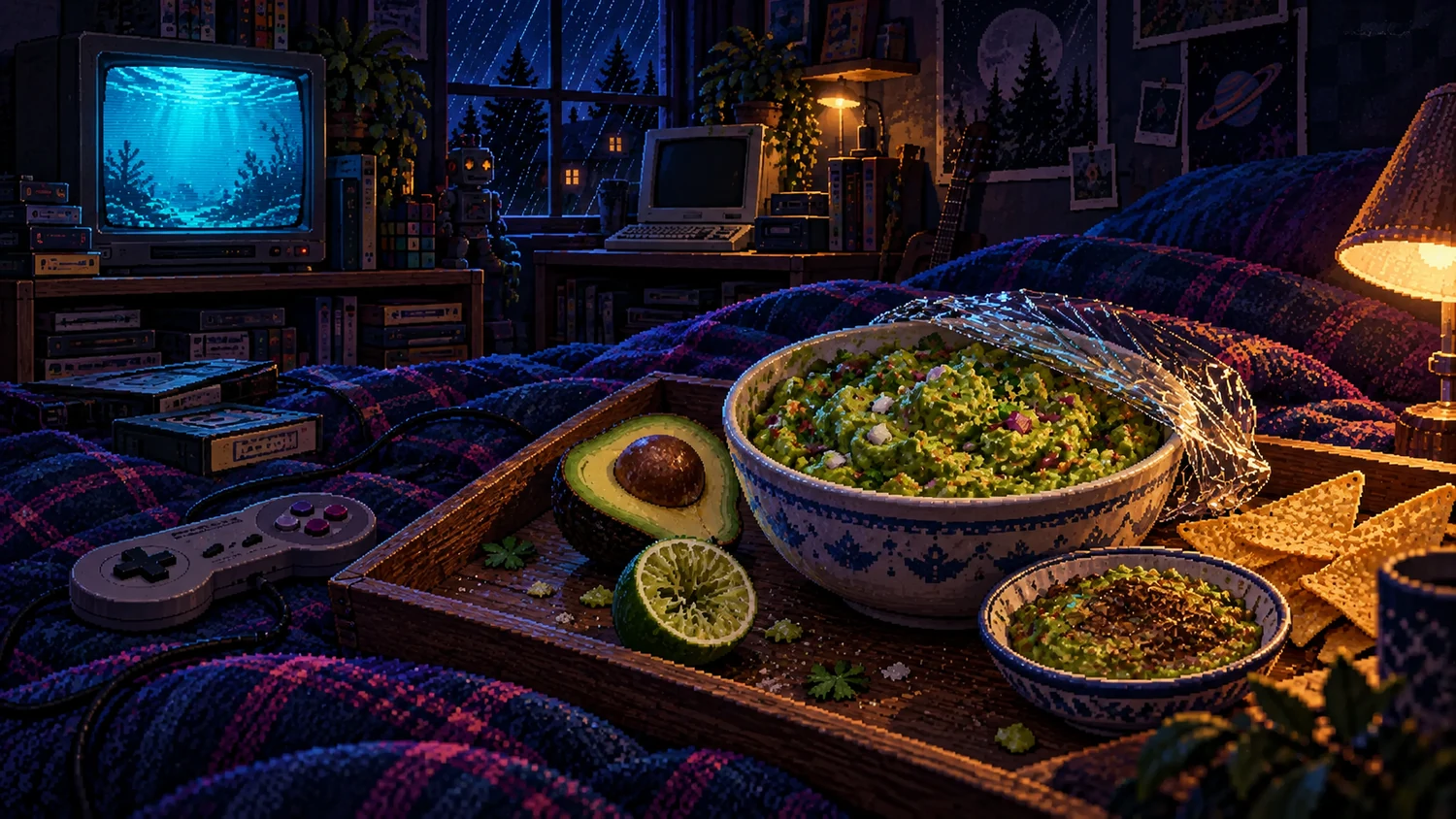
The chips are ready, the controller has changed hands and the dip is developing a brown surface. Someone proposes leaving the pit in the bowl. Someone else reaches for a lime. Both suggestions sound familiar, but familiarity is not an explanation. To choose between them, follow the surface of the guacamole rather than the reputation of the remedy.
A small holiday with a good scientific question
The Nerd Calendar marks September 16 as Guacamole Day. Avocados From Mexico also gives that date for National Guacamole Day. It is an occasion to enjoy the Mexican dip; it does not establish who invented the observance or when it began. We do not need to invent a founding story to find something worth investigating.
Our question is narrower: why does the freshly mashed surface change colour, and how could you tell whether a proposed solution works? This is a satisfying bit of kitchen science because the competing explanations make different predictions. A pit with a bowl-wide protective effect should influence more than the patch immediately beneath it. A physical cover should mainly protect the area it actually covers.
The reaction begins with damaged cells
Cutting and mashing disrupt avocado tissue. Oxygen can participate in reactions involving phenolic compounds and the enzyme polyphenol oxidase, usually shortened to PPO. Those reactions lead to brown pigments. This is enzymatic browning, a familiar food-science problem: a review focused on avocado PPO surveys the challenge of controlling it.
For the home cook, the useful distinction is between changing the fruit and changing its surroundings. Mashing creates the texture you want, but also exposes tissue. What happens next depends on conditions around the food. The browning is not a mysterious countdown with one universal expiry time, and a photograph of a green bowl cannot tell you how it was handled.
The pit is a cover, not a protective field
The California Avocado Commission explains the pit’s limited benefit: it reduces exposed surface where it sits. That is a real effect, but it does not extend across the bowl.
This distinction matters when judging an anecdote. Lift the pit, discover green guacamole underneath and you have observed something real. You have not yet shown that the pit preserved the rest. A convincing explanation must account for both the protected patch and the exposed area around it. The same scene can support a sensible observation and an exaggerated conclusion.
Think of a coaster shielding one patch of a table. Finding that patch unchanged would not demonstrate that the coaster shielded the whole tabletop. The analogy is about coverage, not a claim that a coaster belongs in your food. The pit story becomes much less puzzling once the size of the claim matches the size of the protected surface.
Why lime and close-fitting coverage make sense
Acidity can slow the enzyme-driven reaction; restricting oxygen access tackles another part of the process. The American Chemical Society’s fruit-browning activity explains these principles using apples. The mechanism is useful context, not a guarantee that every fruit or recipe behaves identically.
For a serving bowl, season with lime to taste, smooth the surface and press food-safe wrap directly against it before refrigerating. A lid above a large air gap and a cover touching the dip are different arrangements. Avoid promising that either will preserve a particular shade for a fixed number of hours: the amount of citrus, the fruit and the quality of the seal vary.
More acid is also not automatically a better recipe. A dip can win a colour contest and lose the taste test. Decide what you are optimising: appearance during a short wait, flavour at serving, or convenient preparation. Those goals overlap, but they are not interchangeable.
Try a comparison that can actually answer something
Here is an observation exercise we propose, not a report of measurements already performed. Set aside tiny portions for the comparison and keep the food you intend to serve separate. Use one freshly mashed avocado, mix the mash once, then divide equal amounts among four matching small dishes.
- Leave the first portion untreated as your comparison.
- Place the pit on the second. Later compare the covered patch with the surrounding surface.
- Mix a measured small amount of lime juice into the third, noting how much you used.
- Press food-safe wrap onto the fourth portion, keeping trapped air pockets small.
Keep all four in the refrigerator under the same conditions. Photograph them at the start and after the same chosen interval, using the same light and camera position. Do not keep stirring the samples: that changes the surface you are trying to observe. Discard the observation portions afterwards.
Write your prediction before looking. If the covered sample stays greener, you have evidence about that preparation under those conditions. You have not established the best method for every avocado. If differences are hard to see, report that too. Repeating the comparison with another fruit is more useful than adjusting the photographs until your favourite tip appears to win.
This habit—separating an observation from the story attached to it—is also the thread in our article on Scully’s scientific doubt in The X-Files. A good question becomes stronger when it includes an outcome that could change your mind.
Green is not a food-safety certificate
Colour and safe storage answer different questions. The FDA recommends prompt refrigeration: keep the refrigerator at 4°C or below and limit perishable food at room temperature to two hours, or one hour above roughly 32°C. Lime does not replace refrigeration.
The best souvenir from Guacamole Day
Enjoy the dip, but keep the lesson: ask what a trick changes, identify the comparison and make your conclusion no larger than your evidence. The avocado pit does not need magical powers to be interesting. A green patch beneath it is enough to turn a familiar snack into a better question.