
Godzilla (1954): Why the Aftermath Still Hurts
On November 3, 2026, Godzilla’s Japanese theatrical release turns 72. The most revealing way back into the 1954 film is to look beyond the famous silhouette: at the wounded city, the scientist afraid of his own discovery and the strange absence of triumph when the monster is finally gone.
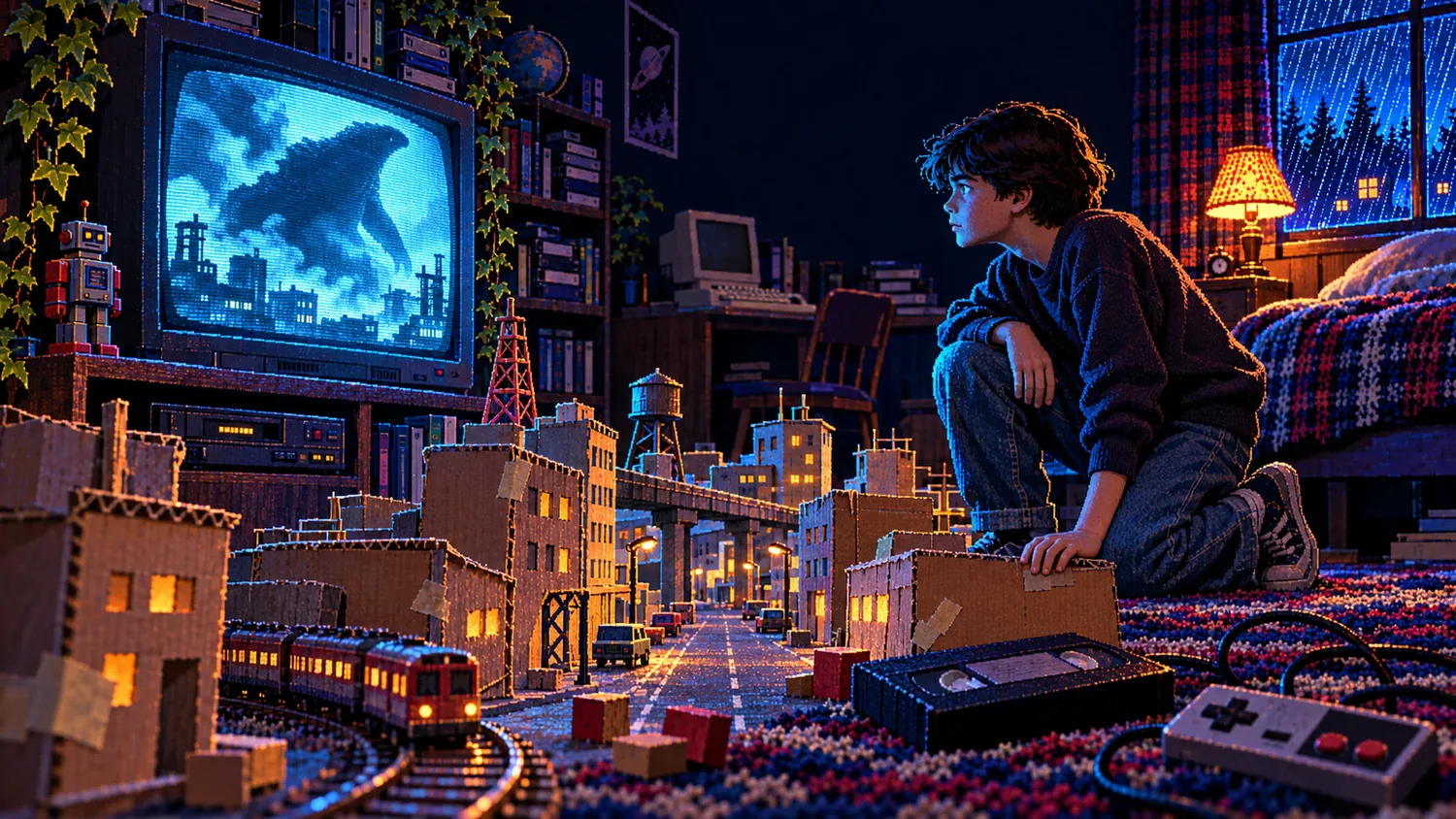
Spoilers: this article discusses the ending of the original Japanese film. The scene readings below are our interpretation, distinguished from the historical information linked to sources.
You can recognise Godzilla without having watched a single film. That familiarity creates a trap: it is easy to arrive expecting a mascot, a wrestling champion or a collection of ingenious destruction shots. Ishirō Honda’s original offers spectacle, but repeatedly returns our attention to people who cannot simply walk away from it. Its sharpest question is not how to kill an enormous creature. It is what kind of world will remain after the killing.
November 3 marks a cinema release, not a TV broadcast
The director’s official film page records the Japanese release as November 3, 1954. The date in the Nerd Calendar therefore concerns a theatrical release; “first broadcast” is an imprecise label for this occasion. This anniversary is a reason to revisit a specific film, rather than treat seven decades of very different Godzillas as interchangeable.
That distinction also applies to versions. The BFI programme notes distinguish the Japanese original from the 1956 American reworking, Godzilla, King of the Monsters! For this reading, choose the 1954 Japanese version. The argument here follows its sequence of fear, destruction and uneasy resolution, not a composite memory of later entries.
The opening puts ordinary work in the path of disaster
The sea is initially a working environment, not an arena. Boats, crews and interrupted routines make the threat feel close to everyday life before the creature becomes a fully visible attraction. We learn about danger through absence and uncertainty. Something has happened to people who had jobs to finish and a shore to return to.
There is a concrete historical context. MIT’s Visualizing Cultures project describes the contamination of the Japanese fishing boat Lucky Dragon No. 5 by fallout from an American hydrogen-bomb test in 1954. That event helps explain why a threatened fishing boat carried an immediate charge. It does not mean every image has to be decoded into one historical equivalent.
Our reading is that the opening establishes the film’s scale in human terms. A distant force reaches into ordinary life, while the people experiencing it have incomplete information. The monster’s size matters because the people facing it are so exposed.
The city matters most when the attack has passed
Watch the change from collapsing structures to injured bodies. Destruction scenes can make us admire what a production team has built and broken. The scenes of care refuse to let that pleasure become the whole experience. They return the city to the people who inhabit it.
A child examined with a radiation detector makes the danger particularly difficult to contain. A wall falling is a visible event; exposure may remain after the visible threat has moved on. The image asks us to fear something the creature’s departure cannot settle. It also changes the meaning of rescue: surviving the immediate attack is not the same as being safe.
The BFI programme notes draw attention to the wounded and the children’s choir. In our reading, the shift towards prayer makes the crowd audible as a community, rather than background noise for the monster. These people are not there merely to certify that the effects look enormous. Their loss changes what we have been watching.
Handmade effects can make the danger feel physical
The model city and the creature’s bodily presence invite an obvious modern response: we can see how some of it was done. That knowledge need not end the illusion. A miniature can still give a shot weight, texture and a clear relationship between a moving body and the things around it.
It is also misleading to reduce the film to a single costume. The BFI’s account of Honda’s monster puppetry explains that puppets supplemented suit performance. The effects are a collection of solutions chosen for different shots. What joins them is the film around them: reaction, sound, framing and the return to vulnerable people.
Our cover’s boy and cardboard city evoke the pleasure of imagining that craft at home. The film itself asks something harder of its audience. Enjoying the construction does not require ignoring what the destruction represents.
Serizawa fears the solution becoming another threat
Daisuke Serizawa’s dilemma gives the climax its moral difficulty. His Oxygen Destroyer may stop Godzilla, but the usefulness of an invention does not guarantee control over its future use. He sees a dangerous difference between solving this emergency and making a new destructive power available.
The film makes that conflict personal. Serizawa is neither a convenient dispenser of scientific answers nor simply an obstacle delaying the action. His reluctance forces the story to consider a cost that would otherwise remain outside the final battle. What happens when other people demand the same solution again?
That concern continues the hospital scenes by different means. Both refuse to let a single dramatic event define the boundary of responsibility. The attack has consequences after the creature leaves; the countermeasure may have consequences after the emergency ends. Fear travels forward in time.
The ending offers survival without a clean emotional reset
Godzilla’s defeat and Serizawa’s death do not produce an uncomplicated celebration. In our reading, the ending resolves an immediate threat while preserving the conditions of unease. The scientist’s sacrifice prevents us from counting victory only by whether the monster has disappeared.
For a related look at how familiar imagery can change emotional meaning, read our piece on Stephen King and the threat inside everyday things. Honda’s film works on a different scale, but likewise asks viewers to look again at a world they thought they understood.
On your next viewing, follow what the film does after each major shock. Whose face does it return to? What remains dangerous? Who has to carry the cost? Seventy-two years after its Japanese release, the first Godzilla still has force because it gives those questions time. The monster makes an entrance. The aftermath makes it matter.