
33 Years of Monkey Island: Why the Adventure Became a Classic
Why did Monkey Island remain a classic 33 years after its debut? Explore its wit, puzzle design and the enduring charm of Guybrush Threepwood.
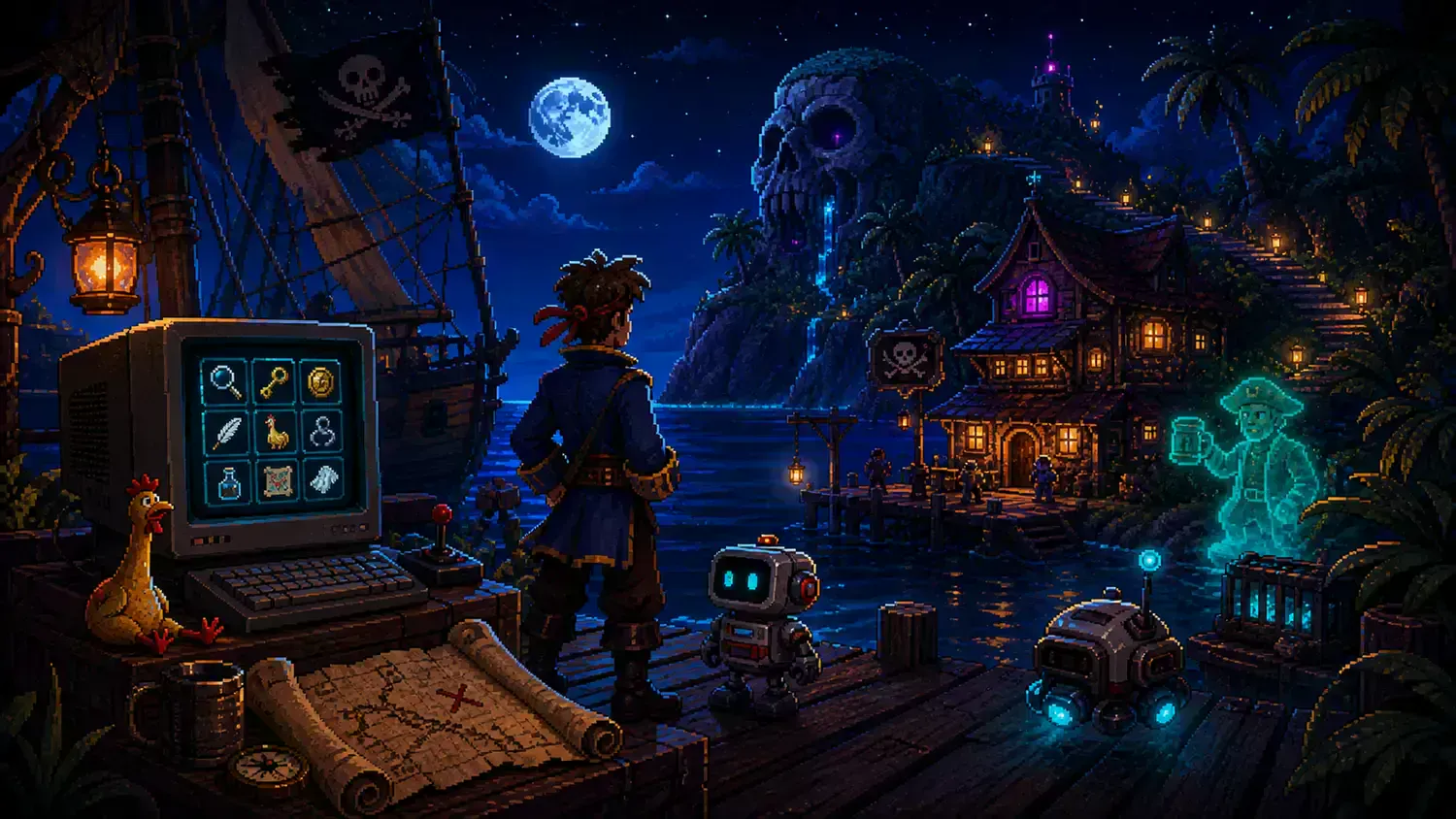
In 2023, 33 years had passed since The Secret of Monkey Island first invited players to become a pirate. Lucasfilm reliably dates the original game to 1990, while a universally documented exact release day is harder to establish. The more interesting anniversary question is therefore not which square to mark on a calendar, but why this strange Caribbean adventure still feels so recognizable.
An adventure game with a voice of its own
The Secret of Monkey Island was designed by Ron Gilbert together with Dave Grossman and Tim Schafer and published by Lucasfilm Games. It mixed pirate adventure, ghost story and point-and-click puzzles with humor that preferred subverting expectations to simply stacking jokes.
The comedy also respected the player. The game could make fun of heroic conventions without treating curiosity as foolish. Exploring the wrong location, testing an unlikely dialogue option or carrying a ridiculous object often felt like part of the performance rather than a failure.
Guybrush Threepwood is the perfect imperfect pirate
At the center is Guybrush Threepwood, a confident beginner with one immovable ambition: he wants to be a pirate. The gap between that confidence and his actual experience makes him immediately likable. He rarely wins through strength. He succeeds through curiosity, wordplay and a willingness to pick up nearly every object that is not nailed down.
That makes Guybrush an unusually good adventure-game protagonist. Players need a reason to inspect everything, ask strangers absurd questions and combine unrelated items. His personality turns those genre conventions into believable character behavior.
Insult sword fighting turns dialogue into game design
The famous insult sword fighting is one of the clearest examples of mechanics and comedy telling the same story. Victory does not belong to the fastest blade. Players must hear an insult, learn the correct comeback and deploy it at the right moment.
The system transforms dialogue into progression: observe, collect language and recognize the matching pattern. Each successful reply makes Guybrush more convincing as a pirate while making the player better at the game. The joke is not decoration placed on top of the mechanic. The joke is the mechanic.
The SCUMM Bar explains the game in miniature
Lucasfilm’s retrospective on the SCUMM Bar describes the location as a defining early moment. It establishes atmosphere, gives Guybrush a goal and lets players discover the world through conversation. The name also nods to SCUMM, the scripting system behind several Lucasfilm adventure games.
That combination captures the series at its best: technical history, environmental storytelling and a joke that works even if the player never notices every layer.
A series that was allowed to change
The original was followed by sequels made by different teams and rendered in changing visual styles. Telltale Games released Tales of Monkey Island in 2009, and Ron Gilbert returned to the series with Return to Monkey Island in 2022.
The series stayed alive not because every installment looked identical, but because its characters, comic rhythm and puzzle logic remained recognizable. Reinvention did not erase the identity; it demonstrated which parts of that identity mattered most.
Why Monkey Island still works
Good adventure design rewards attention. A throwaway sentence, an odd prop or a suspiciously specific name may become important later. Monkey Island combines that structure with characters who remain entertaining even when no puzzle is being solved.
That is why the series feels less like a museum of obsolete mechanics and more like a pirate story that can be retold in new forms. The interface may change, but curiosity, comic timing and the desire to discover what lies beyond the next dialogue option still work.