
Hobbit Day: Why Bilbo Can Give Away Almost Everything Except the Ring
On September 22, Hobbit Day celebrates Bilbo and Frodo’s shared birthday. But the most revealing moment of Bilbo’s famous party happens away from the guests: a generous host discovers that one small possession is almost impossible to leave behind.
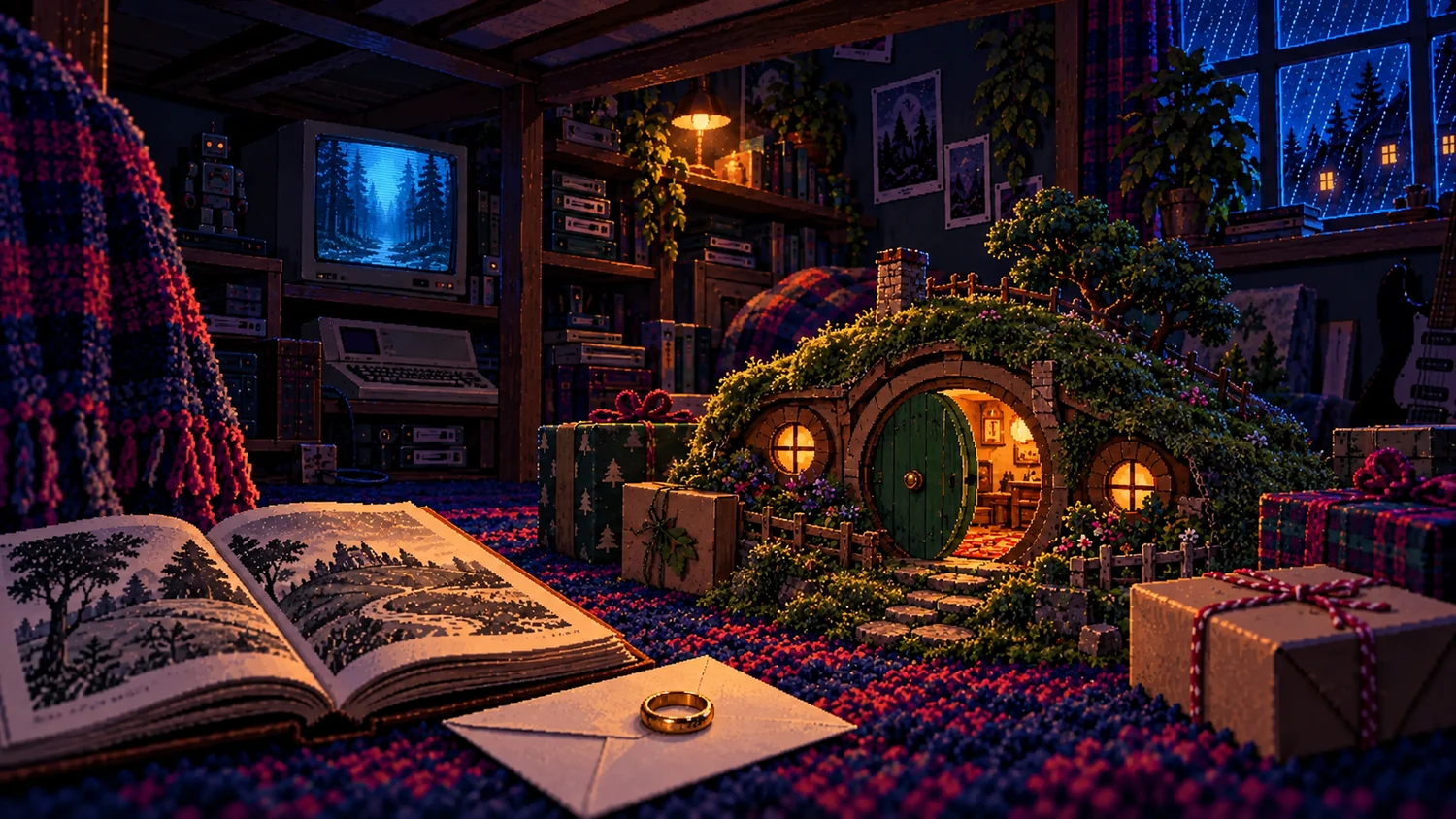
There are fireworks, food and a spectacular disappearance. Yet the opening of The Fellowship of the Ring also offers a quieter way into Tolkien’s story: watch what Bilbo gives away, then notice where giving stops being easy. The contrast turns a cheerful custom into an early question about freedom. Do you still own a thing if you cannot choose to part with it?
This is a close reading of the novel’s opening, with discussion of its early events. It complements NerdSpot’s older Tolkien birthday article by looking at the storytelling inside one celebration, rather than the author’s life or favourite film moments.
Why Hobbit Day falls on September 22
The American Tolkien Society dates the formal observance to 1978 and places Hobbit Day on September 22, Bilbo and Frodo’s shared birthday. It also notes that celebrations preceded the formal designation. The Nerd Calendar marks the occasion alongside Frodo’s birthday.
Keep the real observance separate from the fictional chronology. In the novel’s opening celebration, Bilbo turns 111 and Frodo turns 33, the hobbit age of adulthood. Those are their ages at that particular party, not ages obtained by subtracting a Third Age birth year from 2026. The shared date brings an ending and a beginning together: one life is changing direction just as another reaches a threshold.
That is already more interesting than a birthday coincidence. A celebration can look backward at the person someone has been while formally making room for the person someone else may become. Tolkien lets both movements occupy the same crowded occasion.
The gifts teach us what ordinary generosity looks like
In the opening chapter, hobbits give presents to other people on their own birthdays. Bilbo’s celebration is unusually lavish, but the direction of the exchange is ordinary. The chapter excerpt reproduced with this edition establishes the custom alongside the shared birthday and the two ages.
For a reader accustomed to receiving birthday presents, the reversal is immediately memorable. More importantly, it establishes a baseline. Giving things away belongs to everyday social life here. We do not have to invent a new moral rule when a later object proves difficult to surrender; we have already seen how freely other objects can circulate.
The party also makes generosity tangible. A gift is something that leaves one household and enters another. It changes hands in a world of neighbours, relatives, expectations and jokes. The Shire becomes a place with habits we can understand before it becomes a place we fear losing.
Read this as a storytelling effect, not proof that Tolkien designed every party detail to encode one message. A custom can be funny, socially revealing and thematically useful at the same time. Its strength lies in feeling lived rather than explained for our benefit.
The Ring breaks the pattern
After the public spectacle, the important struggle becomes private. Bilbo intends to leave the Ring to Frodo but resists parting with it; Gandalf presses him to carry out that decision. The publisher’s reading guide also identifies Gandalf’s help in leaving the Ring to Frodo.
The Ring is not handed out at the gate as another party favour. That distinction matters. The birthday gifts and the inheritance belong to different actions, yet placing them near each other invites comparison. A hobbit who can be expansive with possessions becomes defensive around one particular thing.
We could describe the object’s importance by listing its powers. The scene finds a more intimate measure: the effort required to let it go. Resistance supplies evidence before an explanation has finished supplying history. Something is wrong because an apparently simple choice has become unexpectedly difficult.
This is also why the quieter encounter can carry more weight than the disappearance. Vanishing demonstrates what the Ring enables its wearer to do. The argument afterwards suggests what it may prevent its keeper from doing. Power and freedom stop looking like the same thing.
A sequel changes the meaning of an old possession
The contrast has a history in Tolkien’s writing. In his 1964 letter to Christopher Bretherton, Tolkien explains that the magic ring offered a connection between The Hobbit and his mythology; a larger story required it to acquire greater importance.
That account guards against an easy retrospective assumption: that every implication of the Ring was already fixed when Bilbo’s earlier adventure was conceived. The connection developed. An object could remain recognisable while the demands of the new story transformed what recognising it meant.
For readers, the party performs a similar transition. We arrive with the pleasures of an adventure remembered: familiar names, hospitality, a clever trick. Then the familiar object behaves like an unresolved problem. The sequel inherits an earlier story’s treasure and asks whether keeping it is still a happy ending.
Why the small room matters to the large adventure
Nothing about this reading makes Bilbo’s choice effortless or turns him into an invulnerable moral example. The difficulty is the point. Generosity elsewhere does not automatically settle this particular attachment. He needs a conversation, resistance and finally an action.
That gives the epic a human scale before its geography expands. Readers may never have faced a dark lord, but the gap between intending to change and actually changing is intelligible. The opening allows a vast danger to register through a decision made in a home.
Frodo’s adulthood adds a second dimension. Receiving an inheritance is not the same as choosing everything it brings. The shared birthday connects two lives without making their responsibilities interchangeable. Bilbo’s departure creates a new situation; Frodo must eventually decide how to meet it.
A Hobbit Day reading worth trying
Return to the first chapter and follow three movements: things passed freely to guests, Bilbo’s public disappearance, and the private difficulty of leaving the Ring. Ask what each movement tells you that the others cannot. You can do this with a well-used paperback and an attentive half-hour; no encyclopaedia of Middle-earth is required.
If you know the scene mainly from a film, keep the versions distinct. Start with what the prose places next to what, and how it shifts between company and privacy. The useful question is not simply which image you remember, but when the celebration begins to feel different.
The gift is a choice
Hobbit Day is a good excuse for a comfortable evening. Tolkien makes that comfort worth attending to: a world of meals, jokes and presents gives us a concrete measure of what is at stake. Against it, one object becomes disturbing because it resists the ordinary movement from keeping to giving.
Bilbo’s hardest birthday gift is therefore more than a transfer of property. It is an early test of whether a choice can still become an action. The fireworks announce his departure. Letting go makes it possible.